


The league structure
Eight clubs. Fourteen rounds.
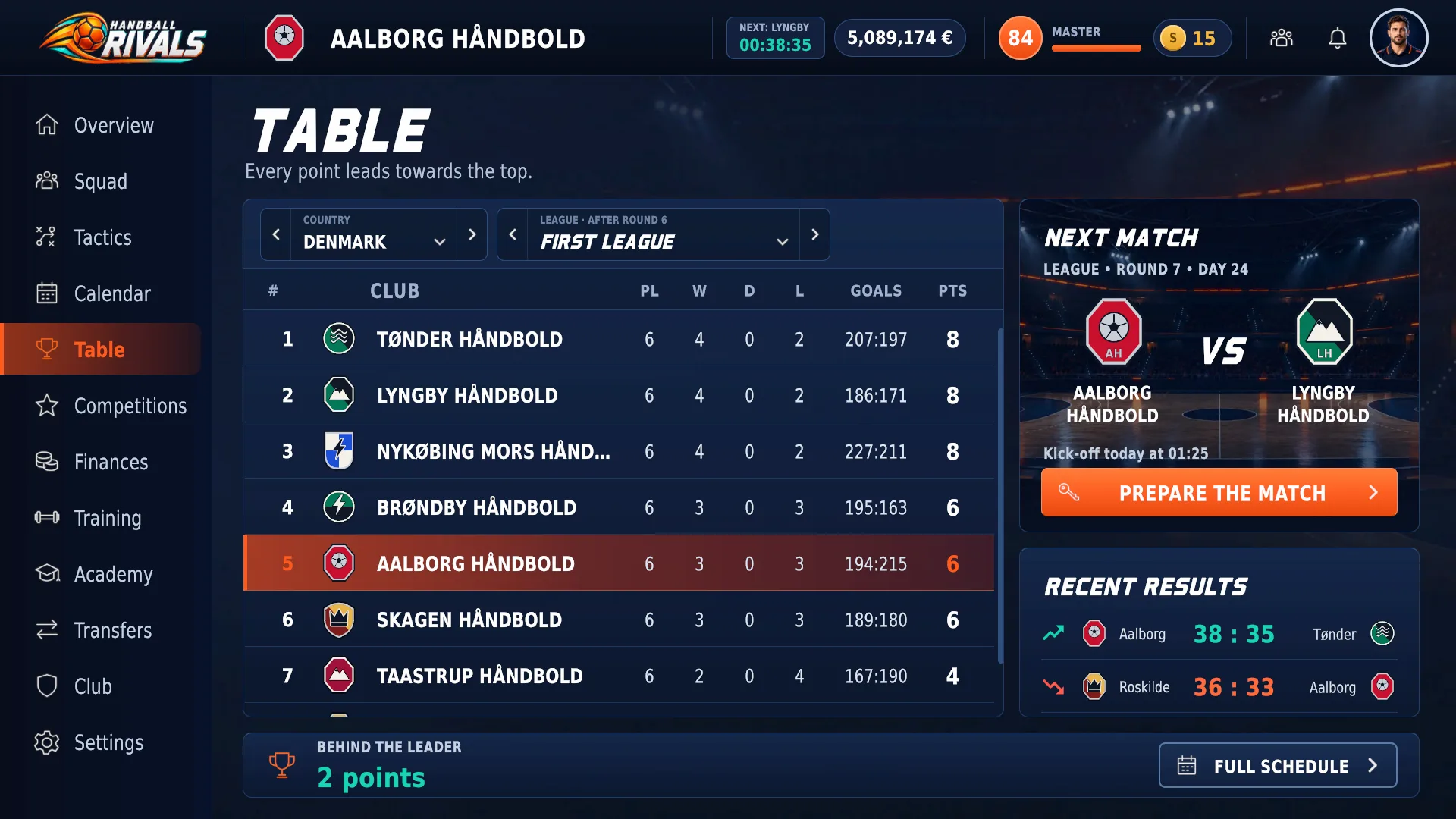
League groups contain eight clubs. Play every opponent at home and away over 14 rounds. A league is defined by country, division and group, so your club has a clear place in the national hierarchy.
- Eight-club groups and a double round-robin format
- One top-flight group in each national pyramid
- Lower divisions can contain multiple parallel groups
Promotion and relegation
The table changes your future.
At the end of the campaign, clubs move between divisions. The number of promotion and relegation places depends on the shape of the neighbouring levels, keeping movement balanced across the pyramid.
- Promotion and relegation between adjacent levels
- Group allocation for the next campaign
- Historical tables remain tied to the season they describe
The season rhythm
Build for the whole campaign.
The Handball Rivals cycle gives you 45 days of competition followed by 15 days for transfers and squad rebuilding. The world continues to move whether clubs are managed by people or AI.
- 45 days to compete and 15 days to rebuild
- Prepare lineups, tactics and squad depth ahead of fixtures
- AI managers keep unclaimed clubs active
Rivals and consequences
Some points mean more.
Derbies add a different kind of pressure. Supporters care about rivals, while results across the season influence the club’s reputation, finances and expectations. A manager has to think beyond a single scoreline.
- City and historical rivalries
- Supporter reactions to derby results
- League-dependent season rewards and reputation changes
Beyond the table
Your league is the beginning.
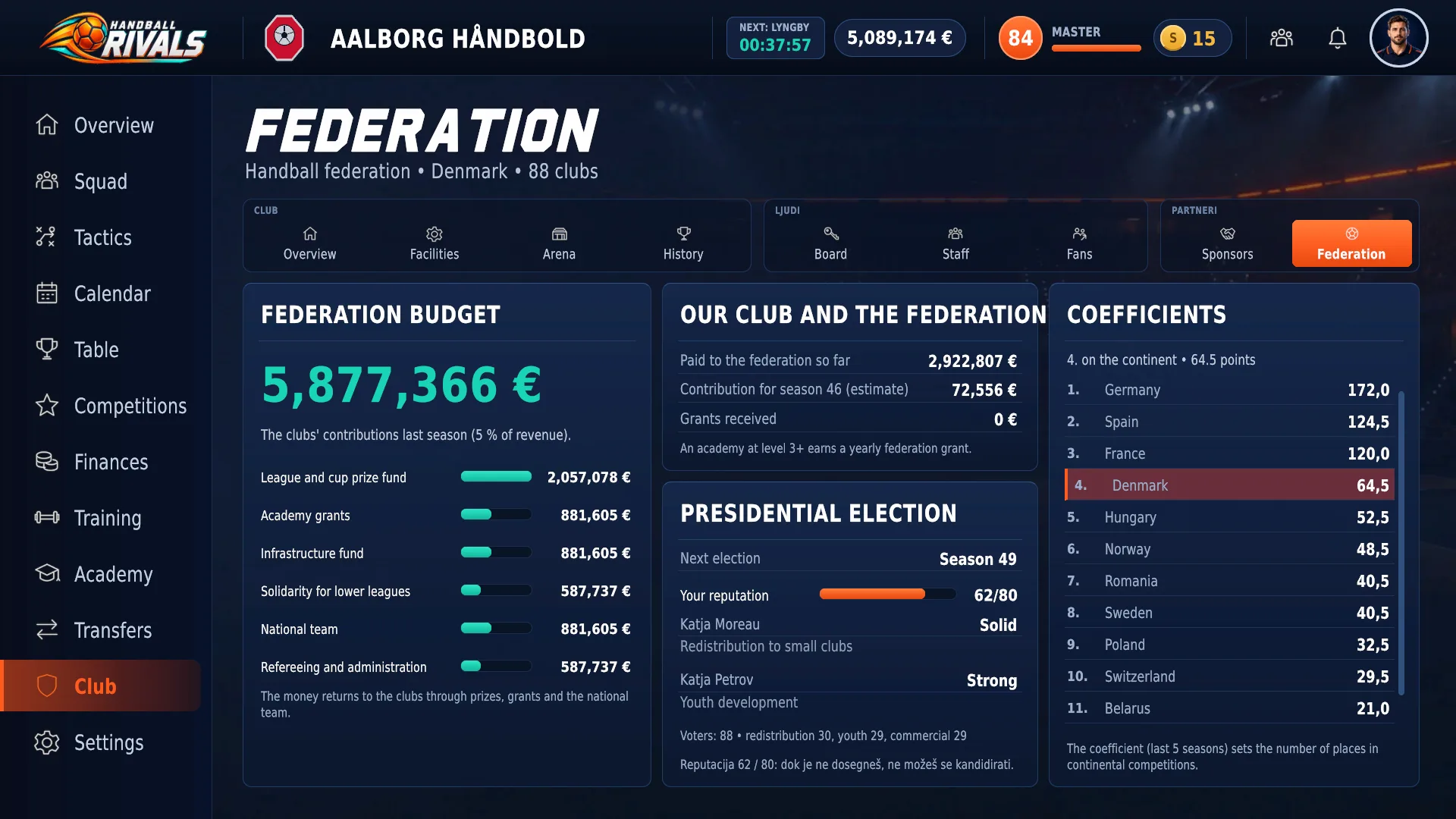
Domestic performance sits within a wider system of national cups and continental qualification. Country coefficients influence continental places, connecting your league to the international game.
- Domestic cups alongside league competition
- Continental qualification linked to country standing
- Club history that follows you from one season to the next